Punjab 11th Class Pass Percentage 2024–2025 (Official Data) & 2026 Outlook
The 11th class result for Punjab boards is scheduled for 22 October 2026, and this year it comes with a change that no previous first-year result has had: the passing threshold has moved from 33% to 40%. So how many students usually pass HSSC Part-I in Punjab, and what could the new rule do to that number?
The answer to the first question is on record. We went through the official BISE Lahore Intermediate Part-I result gazettes for 2024 and 2025, the largest board in the province, along with the 2025 figures reported for other Punjab boards. Here is what those numbers show, and what they suggest about 2026.
BISE Lahore 11th Class Pass Percentage: 2024 vs 2025
| Year | Applied | Appeared | Passed | Pass % |
|---|---|---|---|---|
| 2024 | 167,317 | 162,684 | 84,785 | 52.12% |
| 2025 | 175,949 | 172,100 | 92,541 | 53.77% |
About 9,400 more candidates sat the exam in 2025 than in 2024, and the pass rate rose by 1.65 percentage points. Even so, close to half of all Lahore Board candidates did not clear every Part-I paper in either year.
In the gazette, “passed” means a candidate cleared every subject. A student who scored below the passing mark in even one paper is not counted in the passed figure. Those candidates appear in the gazette with the abbreviation of each subject they did not clear.
Group-Wise Pass Percentage (BISE Lahore)
| Group | Appeared 2025 | Passed 2025 | Pass % 2025 | Pass % 2024 |
|---|---|---|---|---|
| Pre-Engineering | 7,482 | 5,489 | 73.36% | 68.05% |
| Pre-Medical | 36,714 | 23,606 | 64.30% | 62.93% |
| General Science (incl. ICS) | 62,393 | 36,180 | 57.99% | 51.58% |
| Commerce | 10,206 | 5,114 | 50.11% | 51.02% |
| Humanities & Others | 55,305 | 22,152 | 40.05% | 43.54% |
Pre-Engineering had the highest pass rate in both years. General Science improved the most, by more than six points, and it is also the largest group at 62,393 candidates.
Humanities moved the other way. Its pass rate fell from 43.54% to 40.05%, so fewer than half of its candidates cleared all papers in either year. Commerce also dipped slightly.
Boys vs Girls
| Gender | Appeared 2025 | Passed 2025 | Pass % 2025 | Pass % 2024 |
|---|---|---|---|---|
| Girls | 101,629 | 62,735 | 61.73% | 58.90% |
| Boys | 70,471 | 29,806 | 42.30% | 42.48% |
Girls outnumbered boys by more than 31,000 candidates and outperformed them by almost 20 percentage points. The girls’ pass rate improved from 2024, while the boys’ rate stayed almost flat.
Regular vs Private Candidates
We combined the boys’ and girls’ figures from the 2025 gazette to compare institution types:
| Candidate type | Appeared | Passed | Pass % |
|---|---|---|---|
| Regular (private institutions) | 77,936 | 48,940 | 62.79% |
| Regular (government institutions) | 72,720 | 35,726 | 49.13% |
| Private candidates | 21,444 | 7,875 | 36.72% |
The weakest single category in the whole gazette was male private candidates. Only 1,393 of 7,960 passed, a pass rate of 17.50%.
The Subjects Where Most Students Struggled
Most compulsory subjects had high pass rates in 2025: Islamic Education, Translation of the Holy Quran and Urdu were above 88% in every group. A few subjects show where students lose their Part-I result:
| Group | Subject | Pass % 2025 |
|---|---|---|
| Humanities & Others | English | 47.47% |
| General Science | Mathematics | 66.36% |
| Commerce | English | 69.29% |
| Commerce | Principles of Economics | 70.00% |
| Pre-Medical | Biology | 77.67% |
| Pre-Medical | Chemistry | 78.02% |
English in the Humanities group is the standout. Of 54,903 candidates who appeared, only 26,063 passed, which explains much of that group’s low overall result.
In Pre-Medical, Biology and Chemistry were the toughest papers. In ICS and General Science, it was Mathematics.
How Other Punjab Boards Performed in 2025
Other Punjab boards announced their 2025 Part-I results on the same day, 15 October 2025:
| Board | Appeared | Passed | Pass % 2025 |
|---|---|---|---|
| BISE Sargodha | 54,831 | 31,278 | 57.04% |
| BISE Faisalabad | 108,182 | 60,302 | 55.74% |
| BISE Lahore | 172,100 | 92,541 | 53.77% |
| BISE Gujranwala | 142,101 | 71,009 | 49.97% |
Every board in this table fell between roughly 50% and 57%. We have not included boards whose published figures were incomplete or did not add up.
2025 Result Timeline (Lahore Board)
BISE Lahore’s Intermediate Part-I examination in 2025 began on 20 May, ended on 13 June, and the result was announced on 15 October 2025.
In 2026, the papers started later, in mid-June. The Punjab Boards Committee of Chairmen has scheduled the result for 22 October 2026 at 10:00 AM.
What Changes in 2026: The 40% Passing Rule
Every figure above was produced under the old rule, where 33% in a subject was enough to pass.
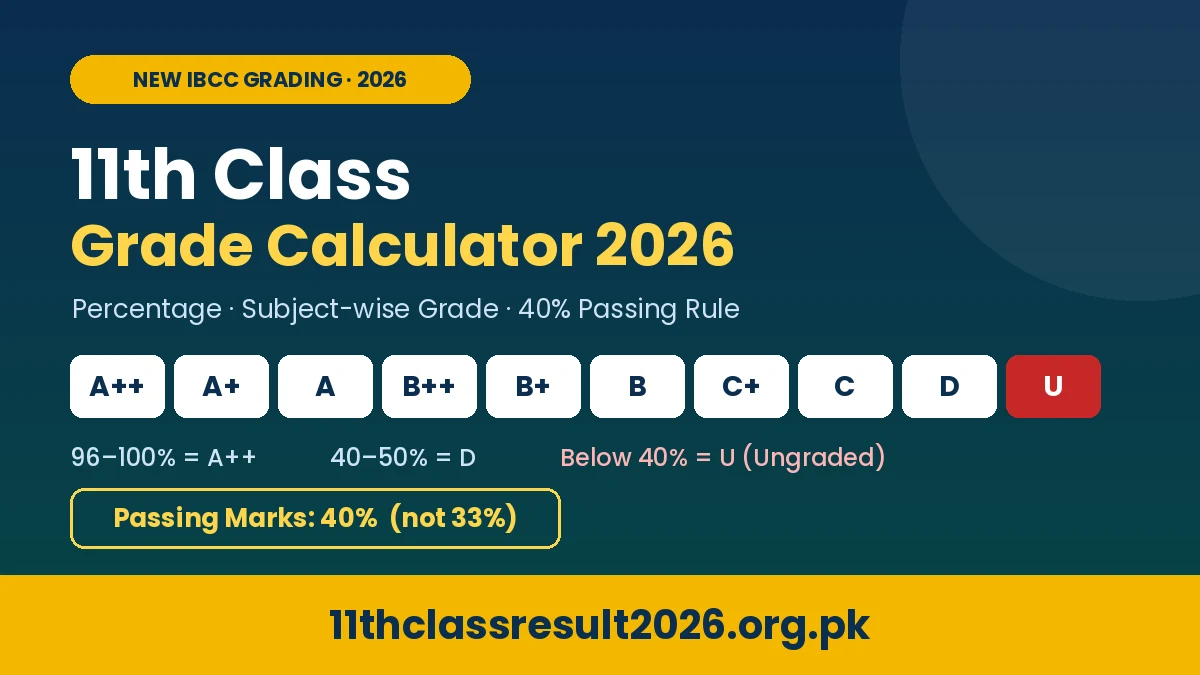
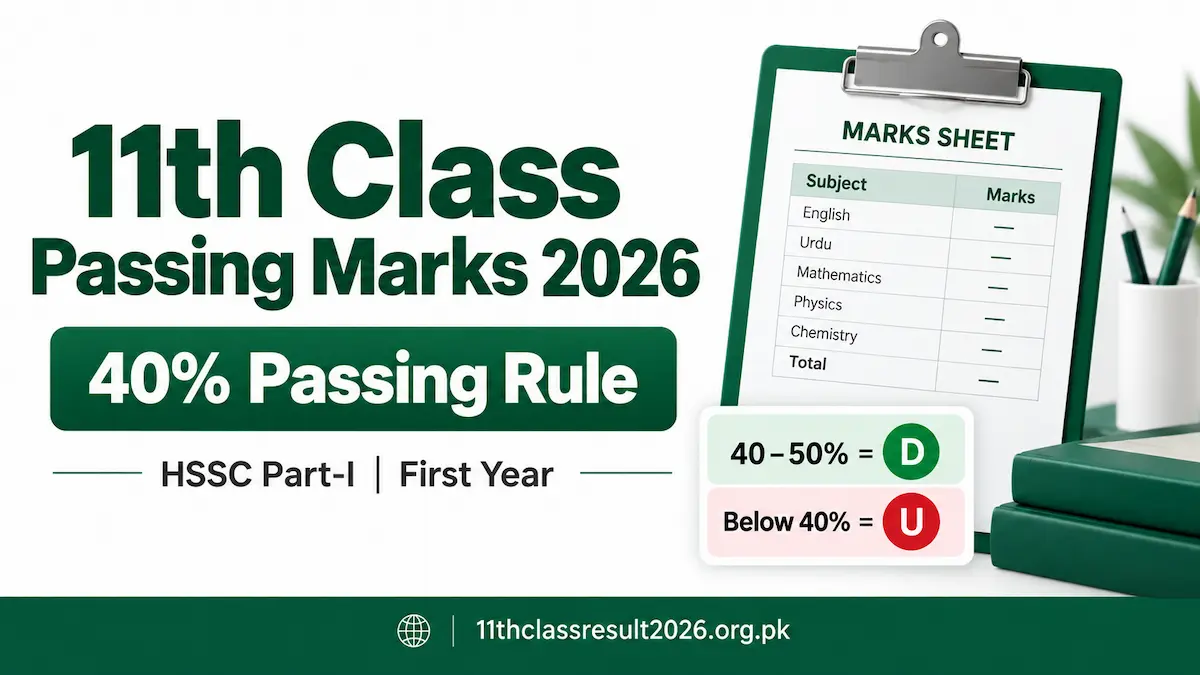
Under the IBCC’s revised grading formula, the 2026 First Annual Examination for SSC-I and HSSC-I uses a 40% threshold. Marks below that are reported as U (Ungraded). This makes the 2026 Part-I result the first one in Punjab where a student needs 40% in each subject.
On a 75-mark paper, that means 30 marks instead of 25. On a 100-mark paper, it means 40 instead of 33.
So What Could the 2026 Pass Percentage Look Like?
We are not going to invent a number. No board has published a forecast, and the result depends on how many students scored between 33% and 39% in each subject, a figure the gazettes do not show.
What we can say from the evidence:
Some students who passed under the old rule would not pass under the new one. Every candidate who scored between 33% and 39% in any single paper previously counted as a pass in that paper. In 2026, that same score is a U.
The weakest subjects carry the most risk. Humanities English (47.47%), General Science Mathematics (66.36%) and Pre-Medical Biology and Chemistry (around 78%) already had the lowest pass rates under the 33% rule. These are the papers where a higher threshold is most likely to show its effect.
Early 2026 results under the new rule point in different directions:
- BISE Lahore’s Class 9 result 2026, also part of the first phase of the new grading system, recorded a pass rate of 46.51%: 130,543 passed out of 287,676.
- The Federal Board’s HSSC Part-I 2026 result recorded an overall pass percentage of 65.31%.
These are different boards, classes and candidate pools, so neither number predicts Punjab’s 11th class result directly. They do show that results under the new rule can vary widely.
The paper itself has not changed. IBCC has stated that the new grading system does not change the paper pattern, marking scheme or difficulty level. The marks are the same kind of marks. Only the line between passing and not passing has moved.
Check Where You Stand
If you have a rough idea of your marks, you can see which grade band each subject falls into, and whether any paper is below 40%, using our 11th Class Grade Calculator 2026.
Lahore Board students can follow result-day updates, gazette links and helpline details on our BISE Lahore 11th Class Result 2026 page.
Frequently Asked Questions
What was the BISE Lahore 11th class pass percentage in 2025?
53.77%. Out of 172,100 candidates who appeared, 92,541 passed.
What was the BISE Lahore 11th class pass percentage in 2024?
52.12%. Out of 162,684 candidates who appeared, 84,785 passed.
Which group had the highest pass rate in 2025?
Pre-Engineering, with 73.36% at BISE Lahore.
Which group had the lowest pass rate in 2025?
Humanities & Others, with 40.05% at BISE Lahore.
Did girls or boys perform better in the 2025 11th class result?
Girls. Their pass rate at BISE Lahore was 61.73%, compared with 42.30% for boys.
Will the 2026 pass percentage be lower because of the 40% rule?
Students who would have scored between 33% and 39% in a paper will now receive a U in that paper, so some candidates who would previously have passed will not. How much the overall pass rate changes will only be known when the boards publish their 2026 gazettes on result day.
When will the 2026 pass percentage be announced?
Boards normally publish their pass percentage and gazette statistics on result day. The Punjab boards’ 11th class result is scheduled for 22 October 2026 at 10:00 AM. This article will be updated with the official 2026 figures.